Dustin Poirier on Joe Rogan: 6 Brutal Lessons From 20 Years in MMA
Not a summary, a lesson!
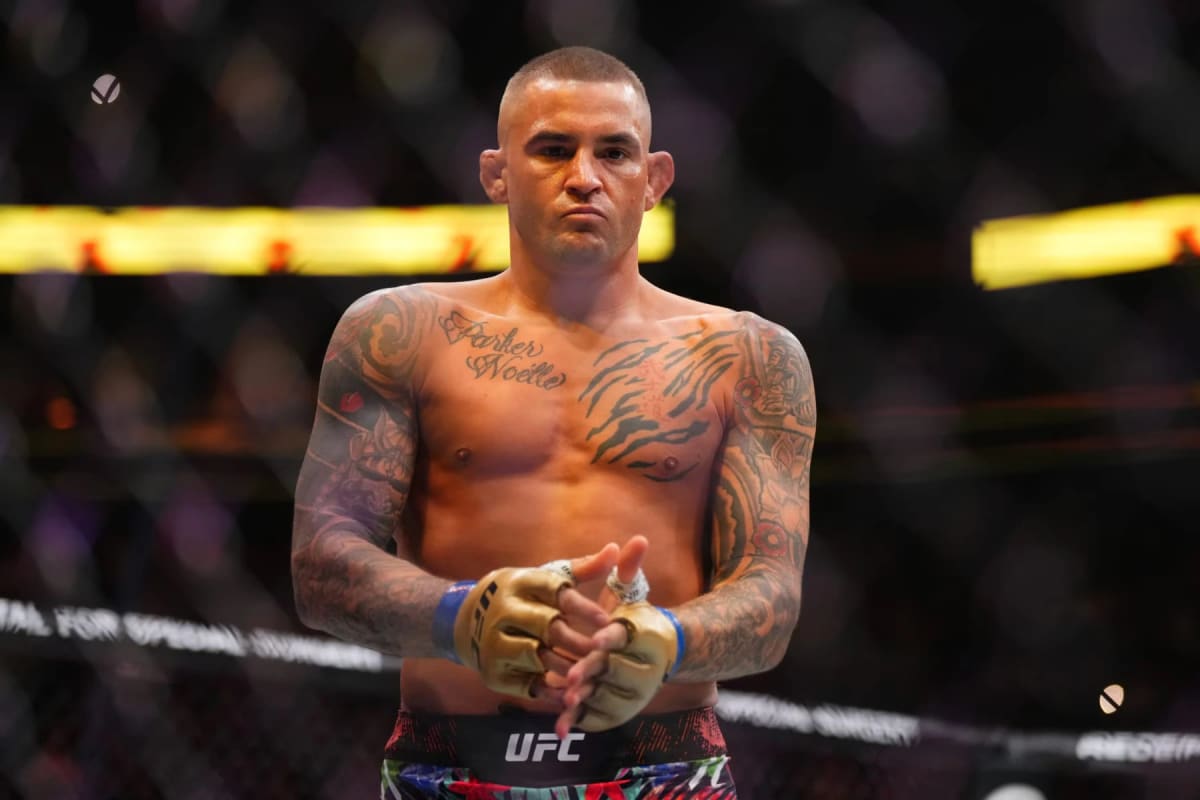
Dustin "The Diamond" Poirier recently sat down with Joe Rogan for one of those long, unfiltered conversations that go way beyond fight talk. Three hours of raw honesty from a man who spent two decades at the absolute top of the most demanding sport on the planet — and just walked away from it.
No hype. Just clarity. The kind you only get when someone who's been through the fire starts looking back at it from a safe distance.
Here are six things Dustin said — and what they actually mean for anyone who trains.
1. Twenty Years of Counting Macros Will Rewire Your Brain
Right at the top of the podcast, Rogan noticed Dustin looked healthy, relaxed. "Yeah, like 190," Dustin said. No fight camp. No weight class to chase. Just a normal human body.
Then came the detail that hit different: his daughter now automatically flips over every product at the grocery store to check the ingredients. Not because she was taught to — but because she grew up watching her dad do it.
That's how deep nutritional obsession goes in a fighter's life. For two decades, Dustin was always in "striking range of 155." Every meal was a calculation. Every label was a threat or a tool.
The lesson isn't that tracking macros is bad. At the highest level, it's necessary. The lesson is: know why you're doing it, and know when to stop. Regimented eating is a tool, not a personality. If you're a recreational athlete obsessing over every gram of carbs for a weekend 5K or a casual BJJ class — ask yourself who you're doing that for.
2. "We Didn't Know." The Cost of Old-School Sparring Culture
One of the most honest moments in the whole interview came when they started talking about training in the early days.
"Like 2006, dude. We used to beat each other up every day. That was MMA training."
No periodization. No recovery protocols. No distinction between a light technical session and a full-send war. Just two guys trying to rearrange each other's faces with 4-oz gloves because that's what "training hard" meant.
Dustin wasn't bragging. He said it with the quiet regret of someone who knows the bill comes due eventually. And the science backs him up — cumulative training trauma, chronic sub-concussive hits, accelerated wear on joints and the nervous system. It doesn't show up in any single session. It shows up years later.
This matters for everyone who trains combat sports at any level. Hard sparring is a limited resource. You don't have an infinite supply of it. Every unnecessary war in the gym is a withdrawal from an account that doesn't refill the same way twice.
Train hard. Train smart. Know the difference.
3. The Scattered Gym Era vs. the Super Gym Era — Why Structure Matters
Before MMA-specific gyms existed, Dustin was driving 45 minutes to a boxing gym, then another 45 to jiu-jitsu, then somewhere else for wrestling. Everything was siloed. You learned the pieces in isolation and tried to stitch them together on fight night.
He credits the evolution of the super gym model—everything under one roof, coaches communicating, training integrated—as a massive leap forward for the sport.
What's the takeaway for us? Structure isn't a luxury. Whether you're training MMA, running, weightlifting, or anything else — the quality of your environment matters as much as the hours you put in. A chaotic, unstructured approach means you're leaving huge gains on the table, not because you're lazy, but because the pieces never talk to each other.
If you're building a training program, treat it like a system. The parts should reinforce each other, not compete.
4. "I Competed My Whole Career Clean. Nothing."
In a conversation full of stories about the steroid era — Pride FC's openly juiced roster, TRT exemptions, fighters whose physiques defied biology — Dustin's line about his own career stood out sharply.
He was so paranoid about contaminated supplements that he only used products certified by Informed Sport's Trusted by Sport program. He understood that "tainted supplement" is sometimes a real excuse, not just an alibi — and he refused to be in a position where anyone could question his integrity.
This doesn't come across as moralising. It comes across as a man who understood what he was doing and why.
The practical message for recreational athletes: supplement scepticism is not paranoia; it's due diligence. The supplement industry is largely unregulated, and third-party testing matters. If you're taking anything — pre-workouts, protein powders, creatine — knowing what's actually in it is a reasonable baseline, not an overreaction.
5. The Hip That Almost Wasn't — Injury Culture and Ignoring Pain
The section of the podcast on Dustin's hip was almost painful to listen to. Bone-on-bone grinding. The hip capsule torn. Range of motion like an 80-year-old. Stem cells, PRP injections, and a surgery that involved going in through the front of the body.
And the thing is — none of this was unusual. He mentioned multiple elite fighters who competed for years with torn ACLs, degraded joints, chronic injuries that would ground a normal person. The culture of fighting through pain is so normalized that it became invisible.
Here's the hard truth: injury culture isn't toughness, it's debt. The bill always comes. You can defer it — camp after camp, fight after fight — but you cannot cancel it. Dustin is 37 years old managing a hip that belongs on someone twice his age.
For anyone training recreationally: you don't have the financial incentive that professional fighters do to push through pain. You do this because you love it. Protecting that ability to keep doing it — actually listening to your body, actually resting, actually treating small injuries before they become big ones — is not weakness. It's the only strategy that actually works long-term.
Learn how to prevent injuries before they start: Beginner Injury Prevention: Running & MMA 🦴
6. "I Don't Know Who I Am Without Fighting."
This might be the most vulnerable thing Dustin said in the entire interview.
After retirement, he described falling into a funk. Not quite depression — but something close. Every morning for twenty years, he woke up with one mission: become a better fighter. How can I push myself? What's new in fitness? I want to be the champion. And then one day, the gloves were down and that mission was gone.
"I wake up and I'm a civilian. It feels crazy. Like I'm relearning who I am."
Even knowing — even genuinely believing — that fighting was something he did and not who he was, the separation was disorienting.
This is one of the most underreported aspects of athletic identity: what happens when the thing that defined your structure, your purpose, your community, and your daily meaning disappears? It doesn't just affect elite athletes. It affects anyone who builds their identity too narrowly around a single physical practice.
The healthy version of training — at any level — is when it's part of a full life, not a substitute for one.
Final Thought - Dustin Poirier never had the longest title reign. He never finished his career undefeated. He was knocked out. He was submitted. He lost fights he should have won and won fights nobody expected him to.
But across everything he shared in that conversation — the weight cuts, the wars in the gym, the drugs he never took, the injuries he accumulated, the identity crisis of putting down the gloves — what came through was a man who was present for all of it. Honest about the mistakes. Clear-eyed about the cost. And genuinely at peace.
We cannot put ourselves in a position not to love Dustin Poirier — as an athlete and as a human being.
We don't really understand these lessons until we’ve paid for them. If this hits, rate it and send it to someone who needs it.
Was this post helpful?
Your feedback helps us improve our content.